A business CCTV system should be designed as a complete security workflow, not a bundle of camera models.
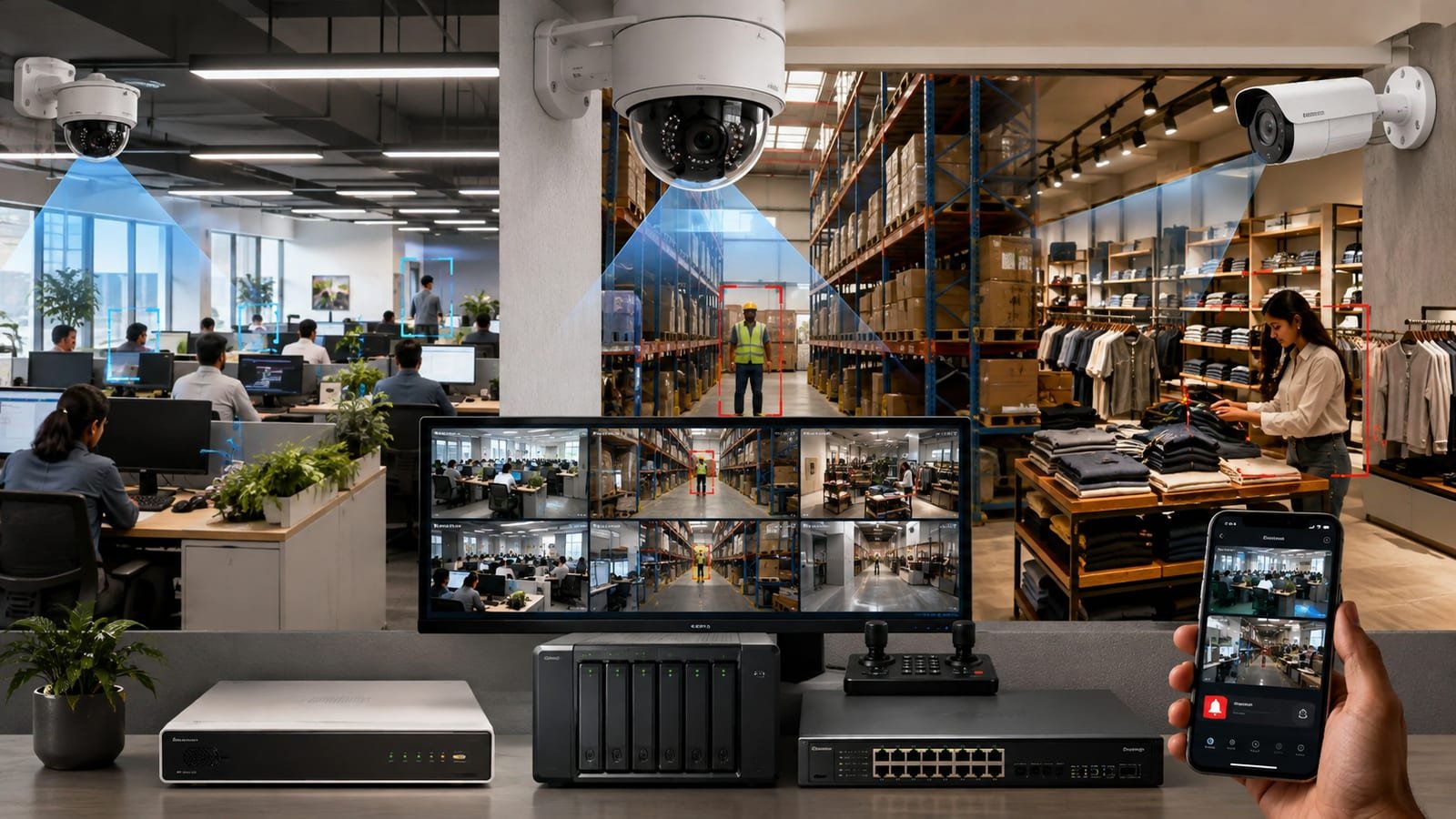
A business CCTV system should be designed as a complete security workflow: cameras capture the right scenes, the recorder stores enough footage, smart alerts surface important events, authorized users can review footage and the system is maintained and secured over time.
Map entrances, cash/transaction points, stock areas, restricted zones, loading areas, parking and perimeters. Each camera should solve a defined problem.
Dome, turret and bullet housings have different mounting advantages, but image quality depends on sensor, lens, lighting and placement. Use tighter framing where identification matters. See our camera brands page for the makes we install.
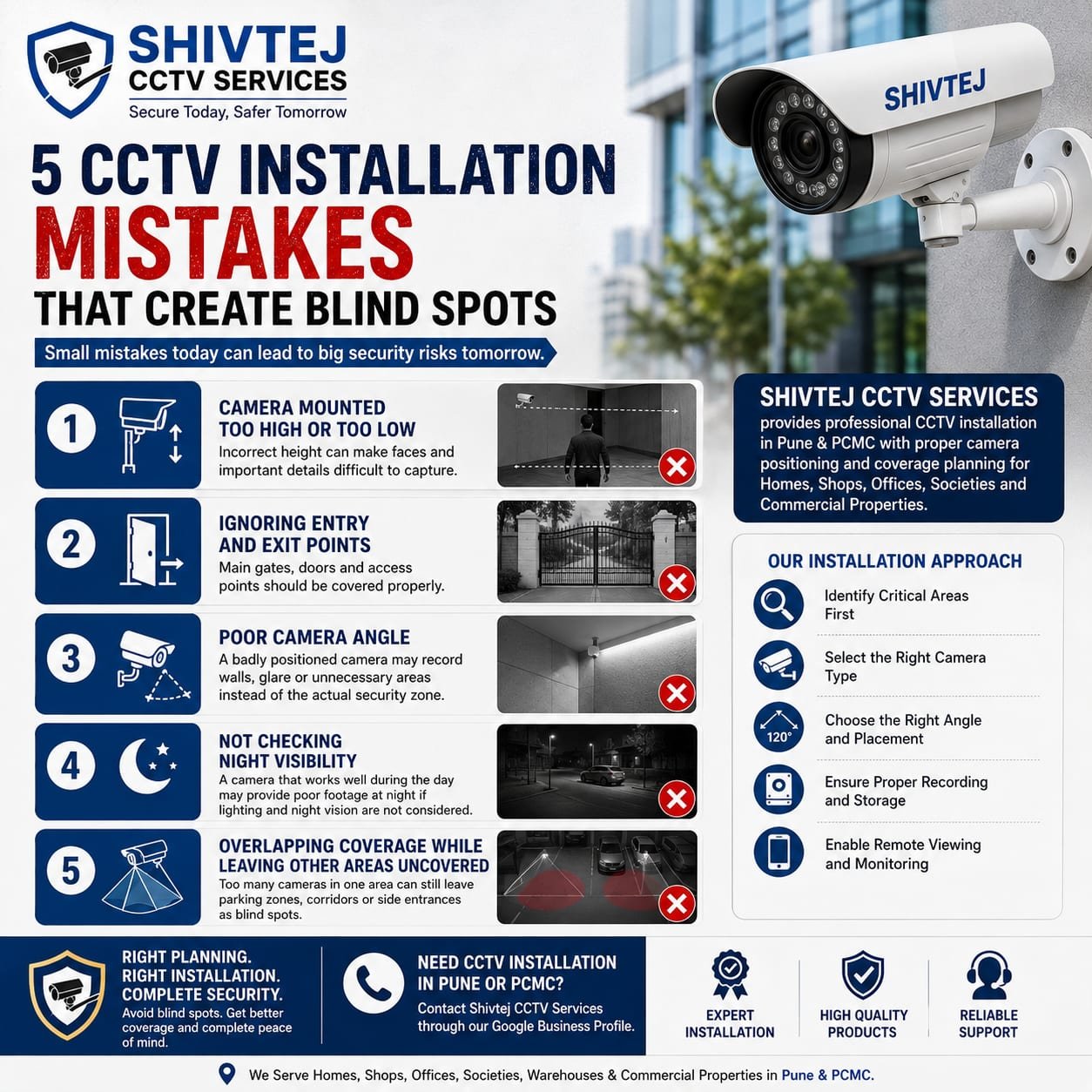
A good commercial CCTV proposal explains what problem each camera solves — not just how many megapixels it has.
DVR can remain practical where good coax cabling already exists. NVR/IP systems can provide flexible network-based expansion. The decision should be based on infrastructure, scale and image requirements.
Human detection, vehicle detection, intrusion zones and smart search are useful when they reduce monitoring effort or speed up response. Avoid buying features that will never be configured or used. Our guide to smart CCTV alerts covers the alert types worth configuring.
Define target retention based on how quickly incidents are discovered. Calculate storage from camera count, resolution, bitrate, frame rate and recording mode.
Mobile live view and playback are useful for owners and managers. Use strong credentials, limit user access and protect the network.
Test face detail at entrances, night footage, glare, vehicle views, timestamps and actual playback. A camera that merely “shows the area” may not provide useful evidence.
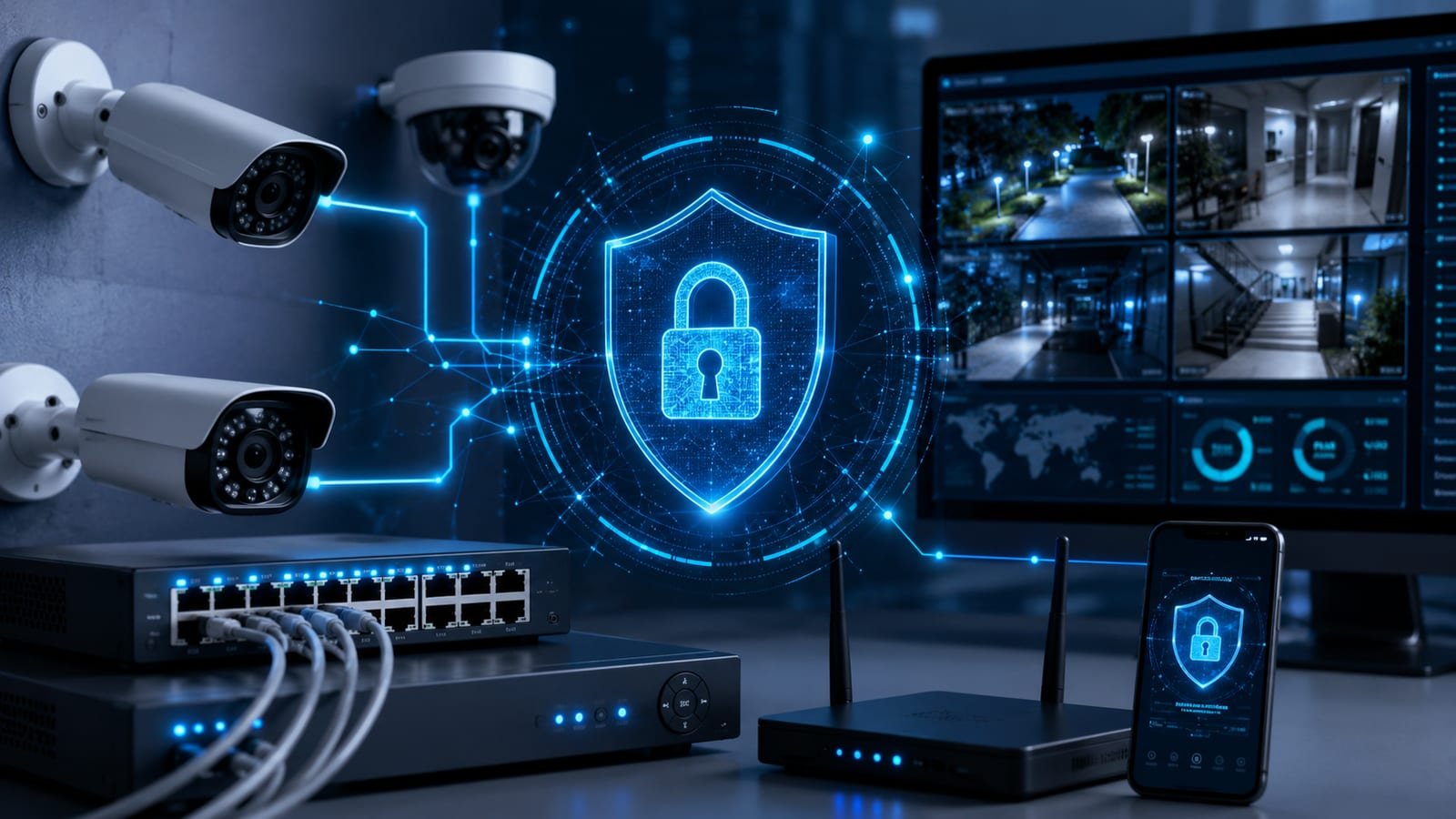
Treat IP cameras and NVRs as network devices. Control passwords, remote access, firmware, network segmentation and physical access to recorders. See our CCTV cybersecurity guide for a full checklist on protecting IP cameras from unauthorized access.
Regularly clean cameras, verify angles, test playback, inspect storage health and confirm mobile/network access. Scheduled AMC helps detect failures before footage is needed.
If the business is growing, allow reasonable capacity for additional cameras, storage and network load. Avoid oversizing without a plan, but do not design a system that is already at its limits on day one.
The best commercial CCTV proposal is not a bundle of camera models. It is a security design tied to business risks, evidence needs, response procedures and budget. Shivtej CCTV supports CCTV installation, repair, AMC, DVR/NVR setup, remote viewing, AI-enabled systems and security consultation with primary service focus in Katraj, Kondhwa, Bibwewadi and Swargate, plus wider coverage across Pune, Kharadi and PCMC. If your business runs a warehouse or production site alongside an office or shop, also see our guide to CCTV security for factories and warehouses.
Shivtej CCTV supports homes, shops, offices, housing societies, warehouses and factories with CCTV installation, repair, AMC, DVR/NVR configuration, remote monitoring support, smart CCTV planning and security consultation — with primary service focus in Katraj, Kondhwa, Bibwewadi and Swargate, plus wider coverage across Pune, Kharadi and PCMC. The recommended system should be based on the property, security objective and recording requirement rather than a one-size-fits-all camera package. Call or WhatsApp +91 93093 73785 or get in touch with our team.

Comments
Be the first to comment on this article.